Scaling AI-generated imagery: an 83% faster production system, with 100% imagery coverage
Nice to meet you — I'm Jorge.
Staff Product Designer shaping AI Agents and automation for regulated B2B platforms

Brands I had the pleasure of working with
Nice to meet you — I'm Jorge.
Brands I had the pleasure of working with
A tool generating $2.3B in vehicle imagery across 200 dealerships — built to reach 100% coverage
- The tool helped dealerships generate photography for their ads.
- But it covered only 80% of inventory.
- It ran through a complicated, multi-step flow that took about 5 minutes to execute.
A car without a photo is a drain on money
The old GenAI tool only covered 80% of inventory and took 5 minutes per car through a slow, multi-step flow. I restructured it to cover 100% of inventory and cut time to under 1 minute.
The old tool topped out at 80%
- Dealership photos vary by angle and setup — the old tool couldn't keep up.
- It covered only 80% of inventory.
- Its flow required several dependent steps, slowing the whole process down.
100% coverage, 83% faster
- Restructured the tool's information architecture, cutting the dependencies that slowed the old flow.
- Made the process more automated.
- The result moves faster and covers every car in inventory.
The results
Built to function — not for the people using it
What did I actually do?
UX audit
Mapped UX bottlenecks and identified UI inconsistencies across the product and design system.
User interviews
8 semi-structured interviews to identify user personas, uncover edge cases, and understand pain points.
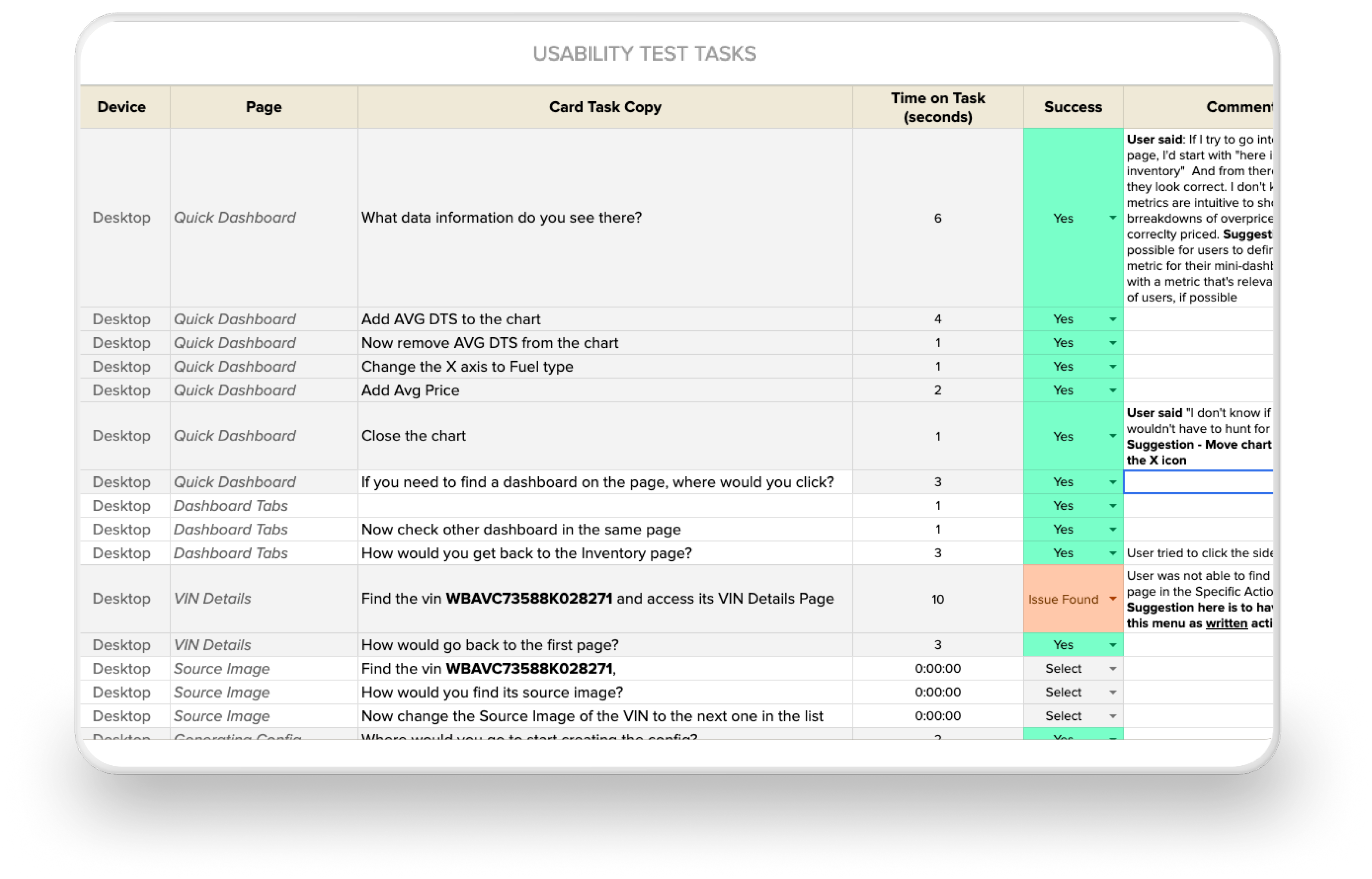
Usability testing
10 sessions across two user groups to validate hypotheses and uncover dead ends in the experience.
Mapping the module structure
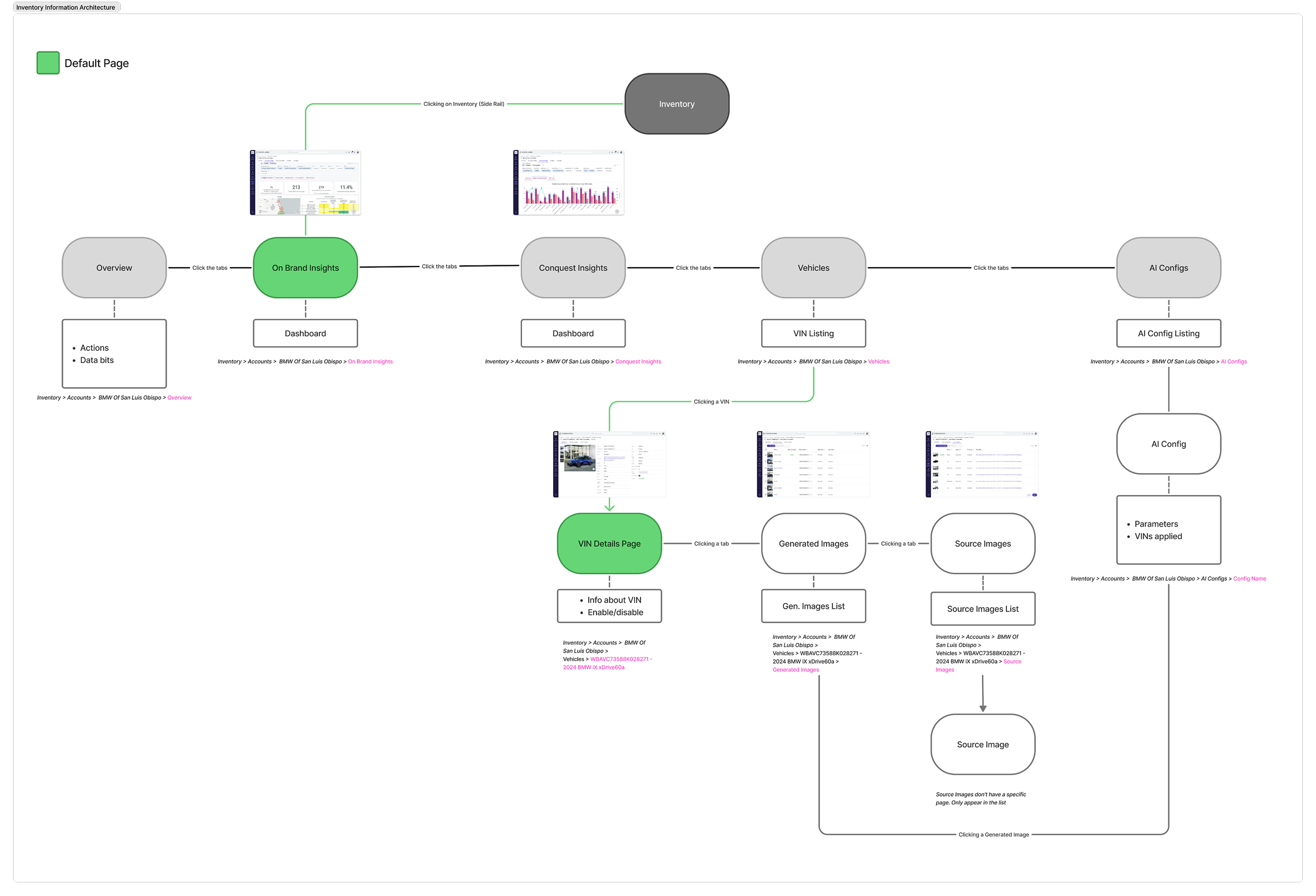
Before talking to users, we mapped the full information architecture to locate exactly where the bottlenecks were.
Two profiles, two very different needs
Interviewing the module's users revealed two profiles: one deep in heavy asset production, another handling occasional, simple results. Both needed intuitive design, but power users required finer calibration control.

Power user
Heavy asset production- Needs general questions answered in place, without breaking the flow
- Needs precise, repeatable calibration
- Optimizes for speed and scale over exploration

Novice user
Occasional, simple use- Visits occasionally, once or twice a month
- Needs to finish one flow start to finish
- Optimizes for clarity over configuration
Built to function — not for the people using it
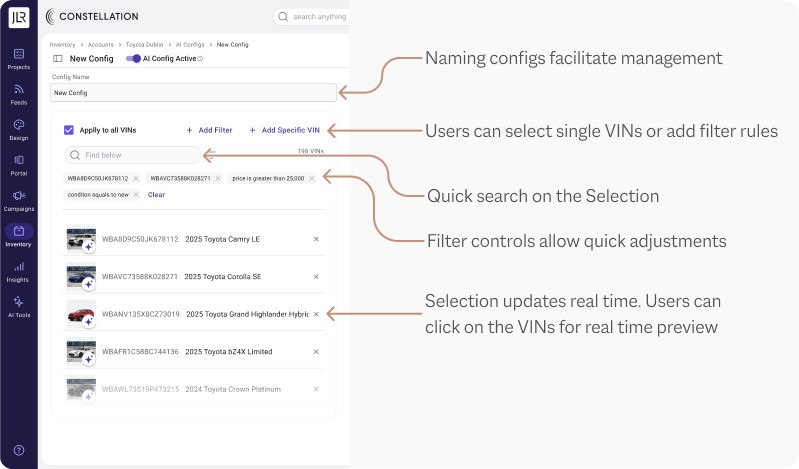
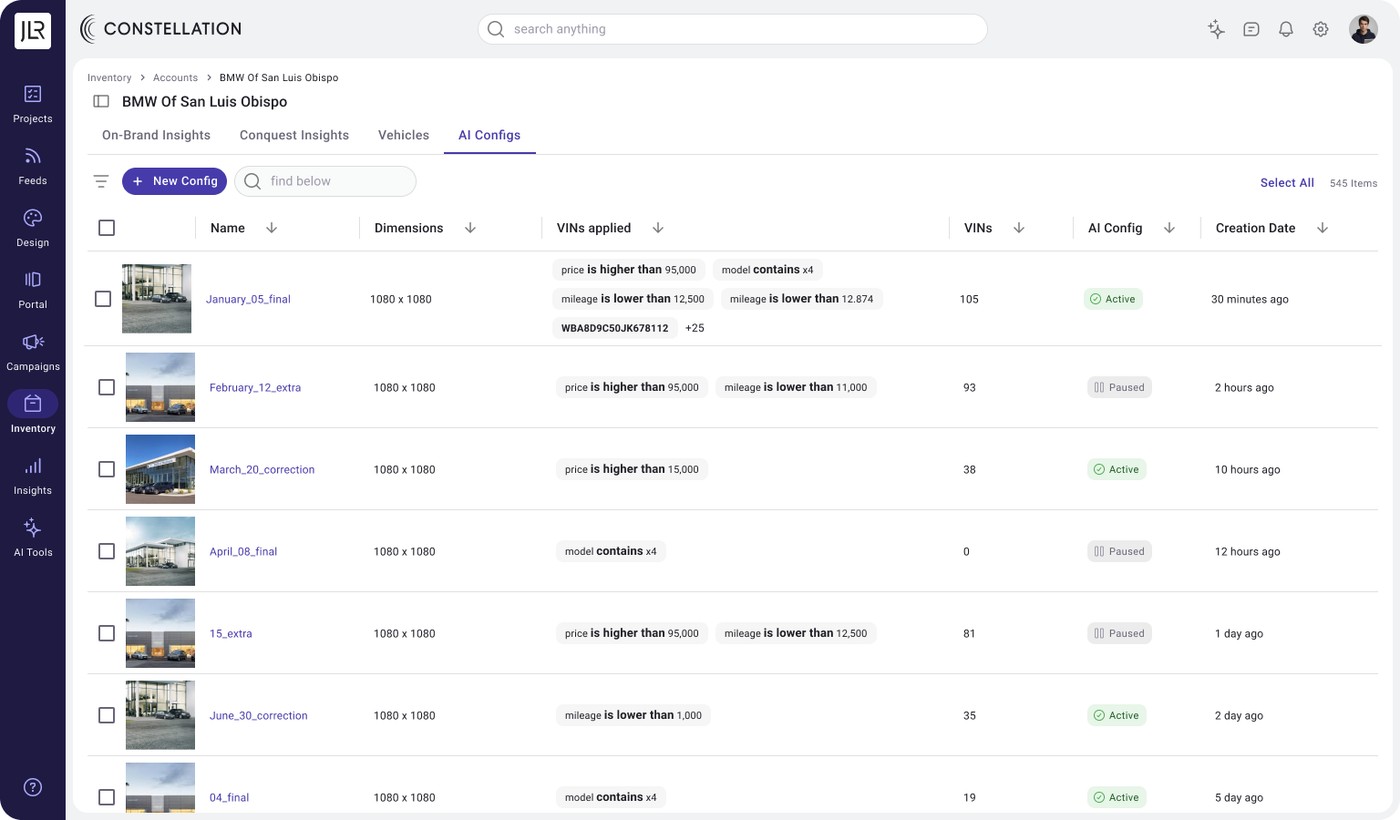
From one config for everything, to infinite combinations
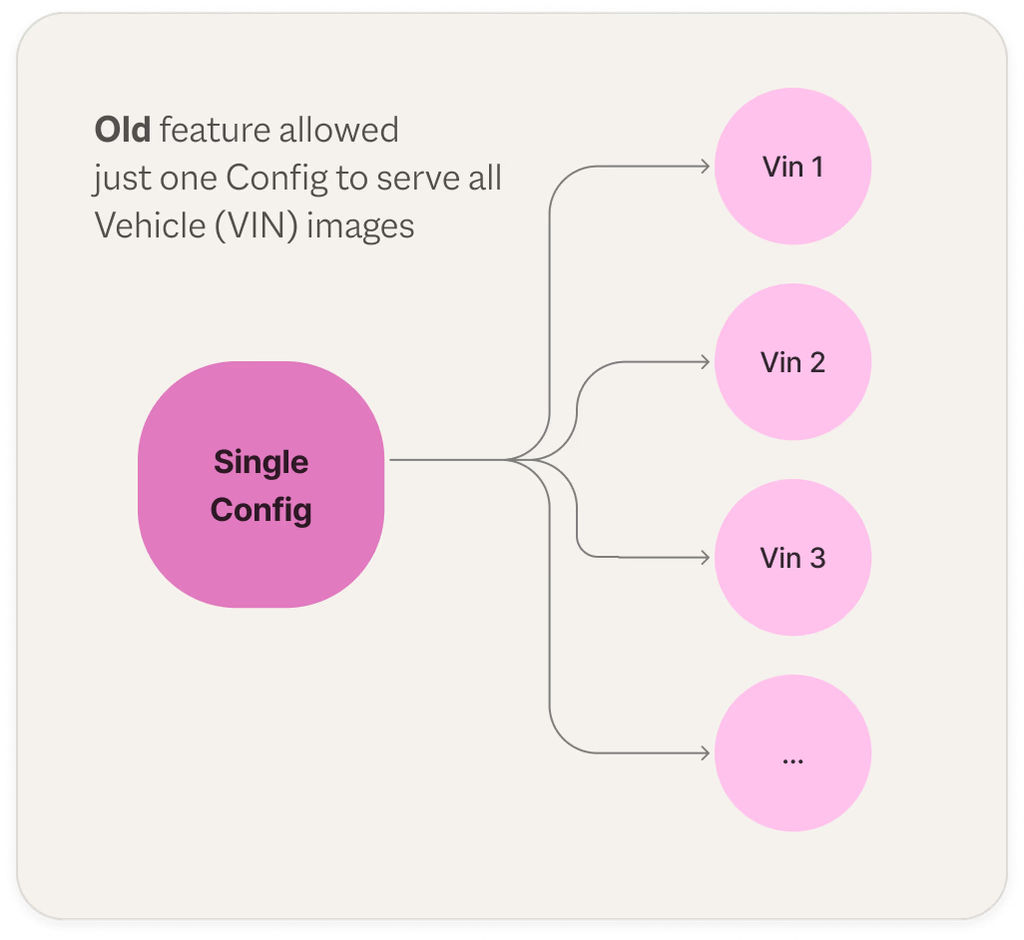
We went from a flow where a single image configuration should serve several different cars, but couldn't.
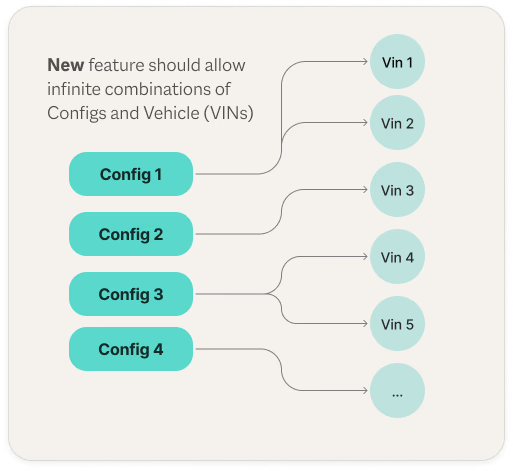
The user now has the power to create as many GenAI configurations as necessary to cover every car in inventory.
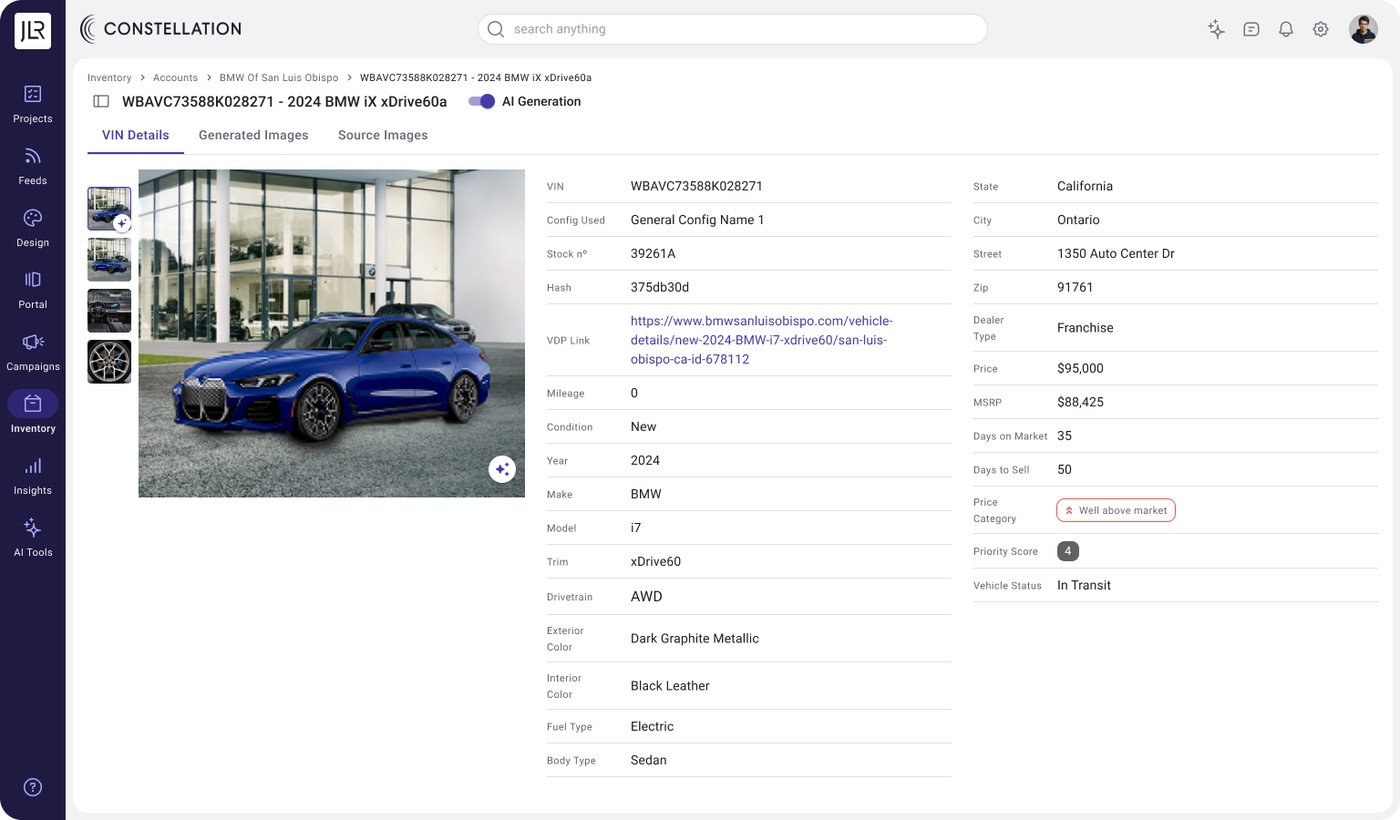
Four moments in the new flow
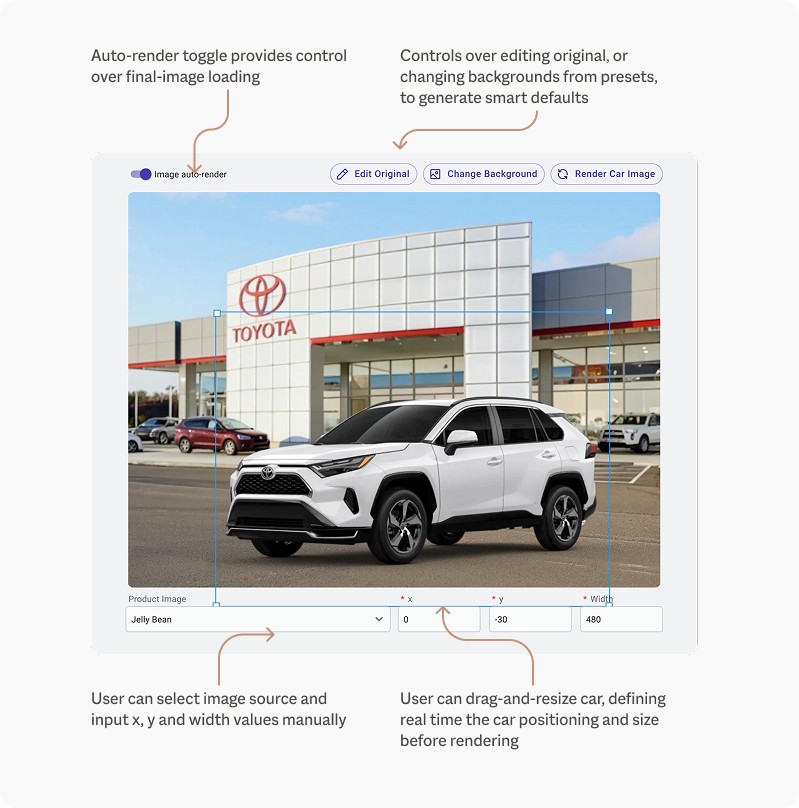
Image editing
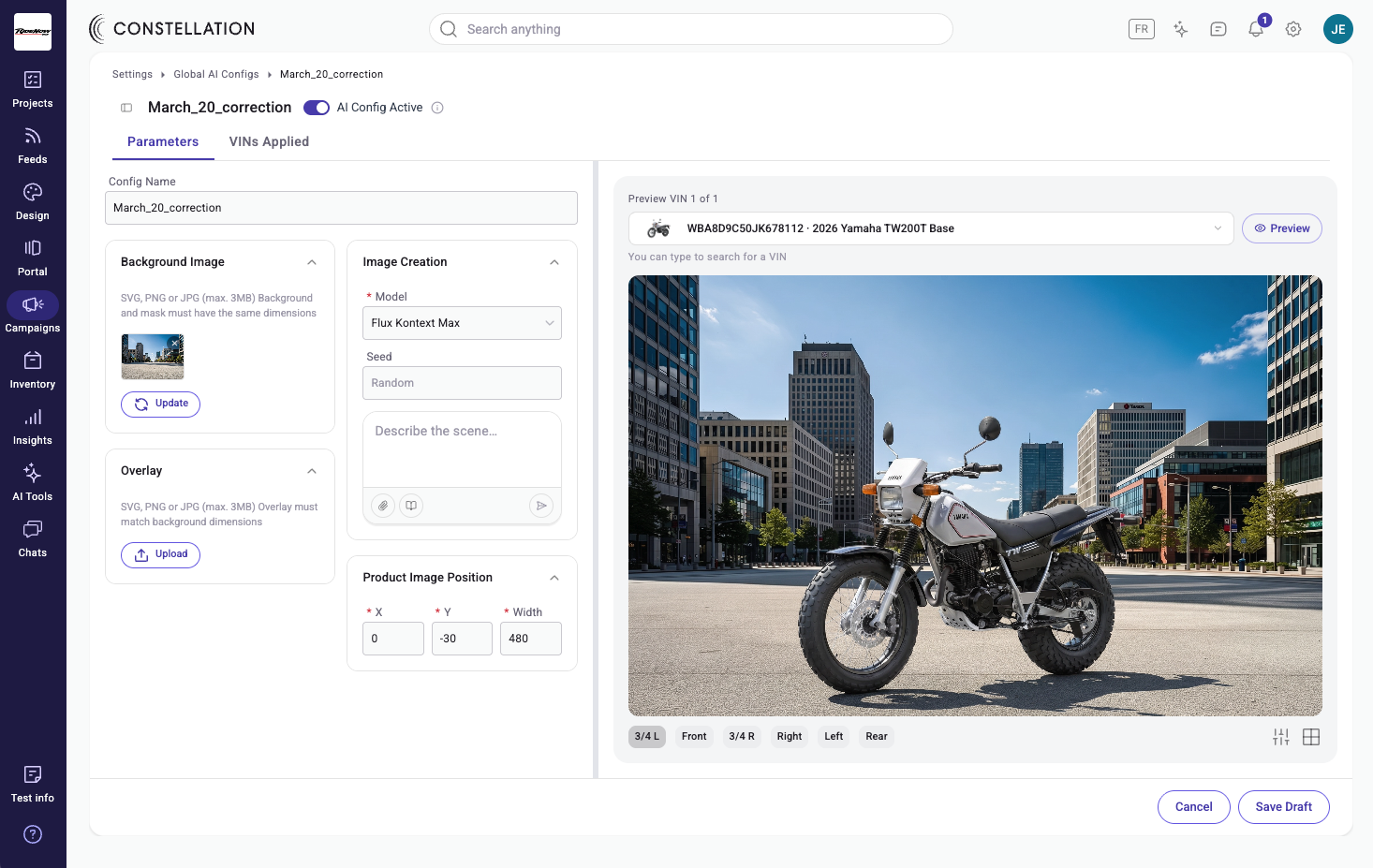
A dedicated workspace for composing the final vehicle image before rendering, with full control over background, positioning and scale.


User testing
The tests validated not only usability improvements, but the structural soundness of the configuration model at scale.
Learnings
Enterprise complexity cannot be removed. It must be shaped.
Simplifying enterprise workflows often removed capabilities power users relied on. Testing exposed the gaps, requiring us to restore complexity where it added value.
Balancing power and simplicity is a constant trade-off.
Power users needed advanced controls, novice users needed clarity. Progressive disclosure and smart defaults balanced both.
Effective UX does not always fit the existing data architecture.
Some interface solutions worked for users but conflicted with the platform's data model. Close collaboration with engineering found the compromise.
Finished designs? AI evolved already.
AI models evolved during the project. As newer models removed the need for background masks, part of the flow became obsolete — we redesigned to withstand rapid change.
What came of it
This project generated two new contracts for a multi-angle version, with Yamaha dealers in the US — worth $160k.
If the project kept going
Capture on the lot
Let someone photograph the car at the dealership straight from their phone and generate the imagery on the spot — cutting the loop even shorter, if the model can hold that quality.
A proactive agent
Study when dealers refresh imagery — holidays, promotions, seasonal pushes — pre-generate smart defaults for those moments, and notify the user. They could even pre-schedule what to change and when.